
Roofing contractors naturally focus on the visible components of a roofing system, including shingles, flashing, underlayment and ventilation products. However, every roof has another important area beneath it: the attic.
Excessive attic heat and moisture can affect roof components, insulation, HVAC equipment and overall home comfort. By evaluating attic ventilation during roofing inspections, contractors can identify problems homeowners may not know exist and recommend a more complete solution.
Adding attic ventilation services does not require changing your business model. It allows you to solve another problem connected directly to the roof while creating an additional source of revenue.
Attic Ventilation Is Part of the Roofing System
A roof and an attic do not operate independently. During sunny weather, the roof absorbs solar heat and transfers it into the attic. Without sufficient ventilation, attic temperatures can rise substantially.
Moisture can also accumulate inside an attic because of outdoor humidity, air leakage from the living space and inadequate airflow. Over time, excessive heat and moisture can contribute to:
- Premature deterioration of roofing materials
- Moisture and condensation on roof decking
- Mold and mildew conditions
- Reduced insulation performance
- Additional strain on HVAC equipment located in the attic
- Uncomfortable temperatures in rooms beneath the attic
- Damage to items stored in the attic
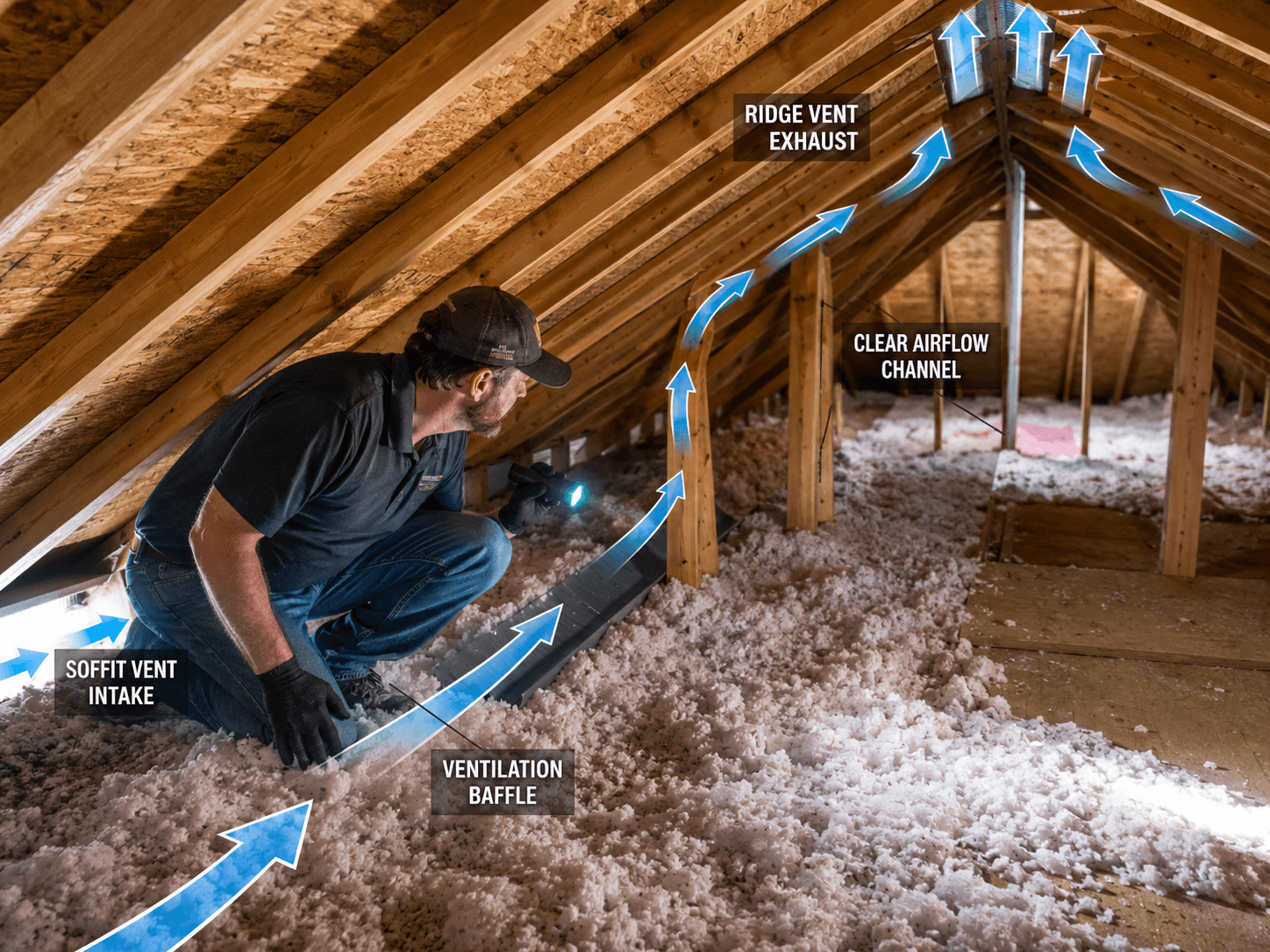
A properly designed ventilation system helps move hot, stagnant and moisture-laden air out of the attic while allowing replacement air to enter through soffit or other intake vents.
Why Solar Attic Fans Make Sense for Roofing Contractors
Roofing contractors are already in a strong position to identify attic ventilation concerns. They have access to the roof, understand roof penetrations and can evaluate the relationship between intake and exhaust ventilation.
A solar attic fan gives contractors an additional solution that can be presented during roof replacements, repairs and inspections.
Solar attic fans operate using energy generated by their solar panels. They require no connection to household electrical power and do not add an ongoing electrical operating cost for the homeowner.
Installation is also relatively straightforward for an experienced roofing professional when the fan is properly selected, positioned and integrated into a balanced attic ventilation system.
The Attic Depot Solar Attic Fan Product Line
The Attic Depot Solar Attic Fans were designed by The Attic Depot specifically for professional contractors and are manufactured to our specifications. Every model carries The Attic Depot branding and is distributed exclusively through our business-to-business contractor network.
All models include:
- Variable-speed 24-volt brushless motors
- Automatic temperature control
- Commercial-grade metal construction
- Corrosion-resistant powder-coated finishes
- Whisper-quiet poly-vinyl blades
- Protective stainless-steel wildlife guards
- Hail- and wind-resistant construction
- Lifetime product protection against manufacturing defects
Additional features vary by model.
25W Roof-Mount Solar Attic Fan
The 25W Roof-Mount Solar Attic Fan is designed for smaller attics up to approximately 1,300 square feet. It produces up to 1,365 CFM and features a compact, fixed solar panel.
Its automatic thermostat activates the fan when the attic temperature reaches approximately 85°F and turns it off when the temperature falls to approximately 70°F.
The 25W model does not have an adjustable panel or humidistat. It is best suited for smaller attics with a roof location that receives strong southern sun exposure.
30W Roof-Mount Solar Attic Fan
The 30W Roof-Mount Solar Attic Fan produces up to 1,550 CFM and is recommended for attics up to approximately 1,500 square feet.
It includes an adjustable solar panel, automatic thermostat and automatic humidistat. The temperature control activates at approximately 85°F and turns off at approximately 70°F. The humidity control activates at approximately 75% relative humidity and turns off at approximately 60%.
The 30W roof-mount model is also The Attic Depot’s Florida and Texas Windstorm Certified and TAS-100 certified solar attic fan. Contractors should review the applicable certification and installation documentation when working in jurisdictions with specific windstorm requirements.
70W Roof-Mount Solar Attic Fan
The 70W Roof-Mount Solar Attic Fan is designed for large attics up to approximately 2,500 square feet. It produces up to 3,850 CFM and includes an adjustable solar panel, thermostat and humidistat.
This high-capacity model can be a strong option when one smaller fan does not provide sufficient airflow or when the roof configuration does not have enough suitable space for two 30W fans.
30W Gable-Mount Solar Attic Fan
The 30W Gable-Mount Solar Attic Fan produces up to 1,550 CFM and is recommended for attics up to approximately 1,500 square feet.
The fan is installed at an appropriate gable opening while its 30-watt solar panel is mounted remotely. This allows the panel to be positioned for better sun exposure without requiring the fan housing to be installed through the roof.
The gable-mount model also includes an automatic thermostat and humidistat.
The Importance of Intake Ventilation
A solar attic fan cannot perform correctly without adequate replacement air. Before recommending any powered attic fan, contractors should inspect the attic’s entire airflow path.
The inspection should include:
- Soffit intake vents
- Ventilation baffles
- Rafter channels
- Insulation placement
- Existing ridge and roof vents
- Obstructions that may restrict airflow
- The proposed fan location
- Available solar exposure
If soffit vents are blocked by insulation or the attic lacks sufficient intake ventilation, the fan may not achieve its intended performance.
The goal is not simply to add an exhaust fan. The goal is to create a balanced system in which outside air can enter through the lower intake vents, move through the attic and exit through the upper exhaust ventilation.
An Opportunity to Educate Homeowners
Most homeowners rarely enter their attics and may not recognize the signs of inadequate ventilation. A roofing contractor can document these conditions with photographs, temperature readings and observations made during an inspection.
Instead of simply offering another product, explain what you found:
- Excessive attic heat
- Blocked soffit vents
- Missing ventilation baffles
- Moisture or condensation
- Inadequate airflow
- An undersized or ineffective existing ventilation system
This approach positions the contractor as an educator and problem solver. It also helps the homeowner understand why attic ventilation is being recommended as part of the roofing project.
Increase Project Value Without Changing Your Business
Attic ventilation can complement roofing, insulation, HVAC, pest-control and energy-efficiency services. Contractors can add it to existing inspections and project proposals without building an entirely separate division.
For roofing contractors, the opportunity is especially practical. If your team is already inspecting and working on the roof, evaluating attic ventilation is a logical extension of the work you already perform.
The Attic Depot supports authorized contractors with product education, installation resources, sales tools, marketing materials and technical support. We do not inspect homes, perform installations or sell solar attic fans directly to homeowners.
Frequently Asked Questions
Do homeowners buy The Attic Depot Solar Attic Fans directly?
No. The Attic Depot is a wholesale distributor that sells exclusively to professional contractors. Homeowners interested in our products can use our dealer locator to find an authorized contractor.
Does The Attic Depot install solar attic fans?
No. The Attic Depot supplies products, training and support to professional contractors, but we do not provide installation services.
Can attic ventilation increase the value of a roofing project?
Yes. Attic ventilation can provide an additional service opportunity while addressing heat, moisture and airflow concerns connected to the roofing system. The recommendation should always be based on the conditions found during the attic and roof inspection.
What makes The Attic Depot Solar Attic Fans different?
Every model includes automatic temperature control, a variable-speed 24-volt brushless motor, commercial-grade construction and lifetime product protection against manufacturing defects.
Features vary by model. Selected models also include adjustable or remotely mounted solar panels and automatic humidity control. The 30W roof-mount model is Florida and Texas Windstorm Certified and TAS-100 certified.
How does a contractor choose the correct model?
Fan selection should be based on attic size, attic configuration, intake ventilation, solar exposure, mounting location and local installation requirements. The Attic Depot offers 25W, 30W, 70W and 30W gable-mount options for different applications.
How can I become an authorized dealer?
Qualified contractors can apply to become an authorized The Attic Depot dealer. Authorized dealers receive access to professional products, training, installation information, marketing resources and ongoing support.
If you are already working on the roof, evaluating attic ventilation simply makes good business sense. You can help the homeowner address another part of the roofing system while adding a valuable service to your company.